3rd International Workshop · UbiComp/ISWC 2026
XAI for U 2026
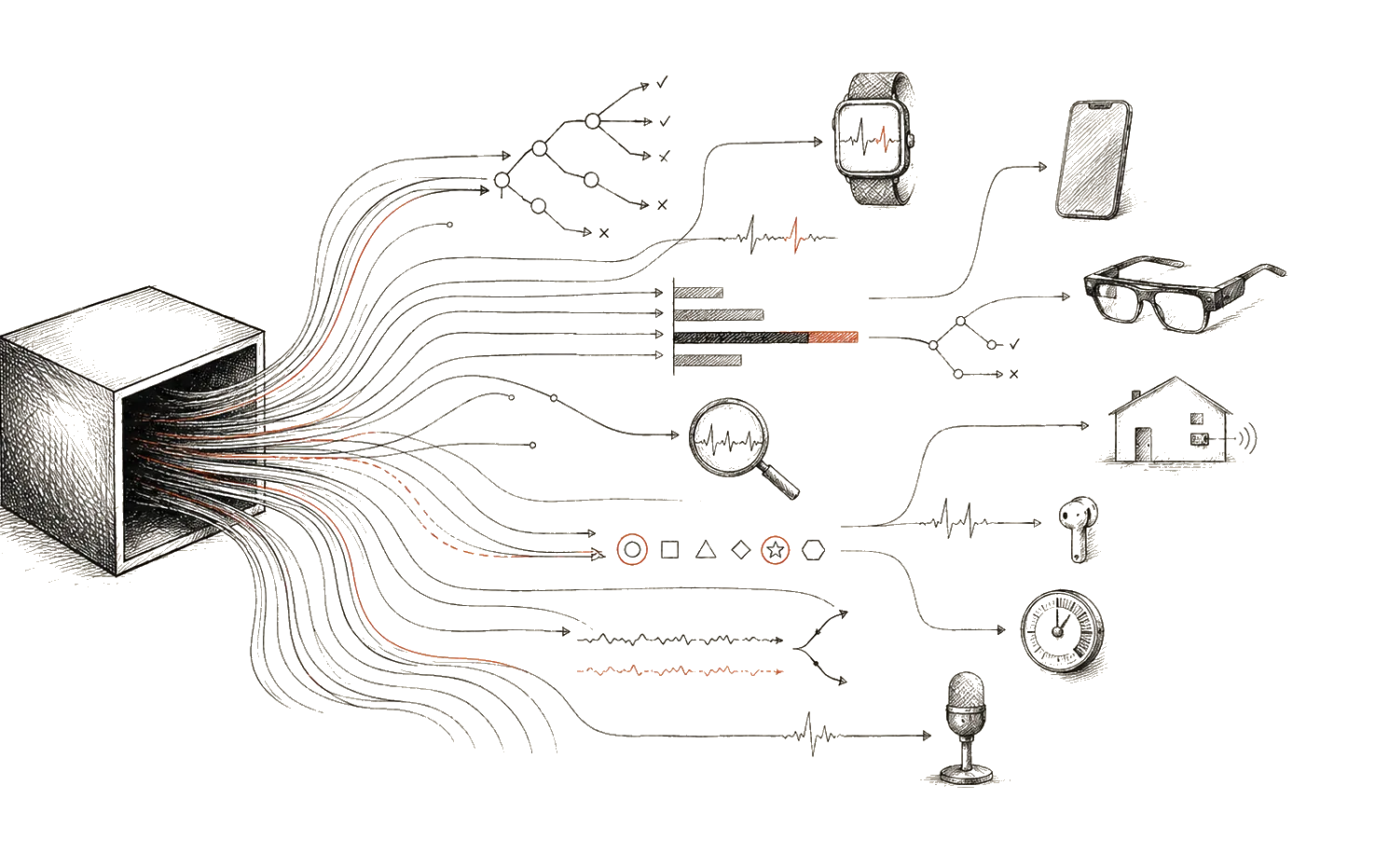
Explainable AI for Ubiquitous, Pervasive and Wearable Computing. A workshop on transparency for AI systems embedded in the things we wear, carry, and live with.
Explainable AI for Ubiquitous, Pervasive and Wearable Computing. A workshop on transparency for AI systems embedded in the things we wear, carry, and live with.
The XAI for U workshop addresses the need for transparency in AI systems increasingly integrated into mobile devices, wearables, and smart environments, many of which remain opaque to users, designers, and stakeholders—undermining trust and adoption. The workshop focuses on Explainable AI (XAI) tools tailored to this domain and its distinctive challenges: generating explanations for time-series and multimodal data, interpreting interconnected machine learning pipelines, and delivering user-centered explanations. By bringing together researchers across related disciplines, it aims to share recent advances, surface open challenges, and propose future research directions, so that AI-driven ubiquitous solutions become not only more explainable but also better aligned with user expectations and ethical standards.
Original research, insightful case studies, and work-in-progress on XAI approaches for ubiquitous and wearable computing, including but not limited to:
Explanation methods tailored to wearable and IoT settings, including multivariate time-series and heterogeneous sensor streams.
Explaining end-to-end pipelines (pre-processing, segmentation, classification) rather than individual models in isolation.
Explanation strategies that adapt to user needs, context, and the dynamic environments typical of ubiquitous systems.
Empirical evaluation of explanations, including faithfulness metrics, user studies, and over- or under-reliance on decision-support tools.
Deploying XAI on resource-constrained wearable devices, with attention to privacy, fairness, and alignment with the EU AI Act.
Domain applications of XAI in healthcare, mental health, human activity recognition, and smart-home/smart-environment systems.
Approaches that combine symbolic reasoning, neuro-symbolic models, and LLMs for generating and verbalising explanations.
Thank you to all authors for their contributions. The programme features 5 full papers and 3 short papers, presented at the workshop in Shanghai, China, in conjunction with UbiComp/ISWC’26.
For registration information, fees, and deadlines, please visit the UbiComp'26 registration page.
View the scheduleSubmissions follow the ACM sigconf template, single-blind, in English. See the UbiComp/ISWC'26 formatting guidelines for details.
Full papers: up to 6 pages (including references). Submitted via PCS. Peer-reviewed; accepted full papers will be published in the ACM Digital Library and Adjunct Proceedings.
Short submissions: up to 4 pages (including references). Submitted via HotCRP. Accepted short submissions will not be published in the ACM Digital Library or Adjunct Proceedings, but will be listed on this website.
Poster abstracts: 1-page abstract describing an XAI-related paper accepted at the UbiComp/ISWC'26 main conference. Submitted via HotCRP. Listed on this website only.
At least one author of each accepted contribution must register and present in person.
Tentative — will be finalised when the call for papers is released.
Submission deadline:
Full (6 pages): July 16, 2026
Short (4 pages) & Poster abstracts: August 12, 2026
Notification of acceptance:
Full (6 pages): July 31, 2026
Short (4 pages) & Poster abstracts: Rolling basis (not later than August 10, 2026)
Camera-ready deadline:
Full (6 pages): August 20, 2026 (ACM DL hard deadline)
Short (4 pages) & Poster abstracts: August 20, 2026
Workshop date: Monday, 12 October 2026
Submissions are closed. Authors of accepted contributions can manage their submission on the relevant platform below.
Archival track (full papers) — PCS. After logging in, use the dropdown menus at the top of the page and select: SIGCHI → Ubicomp/ISWC Workshop 2026 → Ubicomp/ISWC Workshop 2026 XAI for U 2026.
Non-archival tracks (short papers and poster abstracts) — HotCRP. The site has one entry point per submission type; choose the appropriate one when starting a new submission.
For registration information, fees, and deadlines, please visit the UbiComp'26 registration page.
See the accepted papers; the presentation order will be announced soon.

Listed alphabetically by title within each track. The presentation order will be announced with the final schedule.
Swiss National Science Foundation (SNSF) — Project XAI-PAC: Towards Explainable and Private Affective Computing (PZ00P2_216405)